

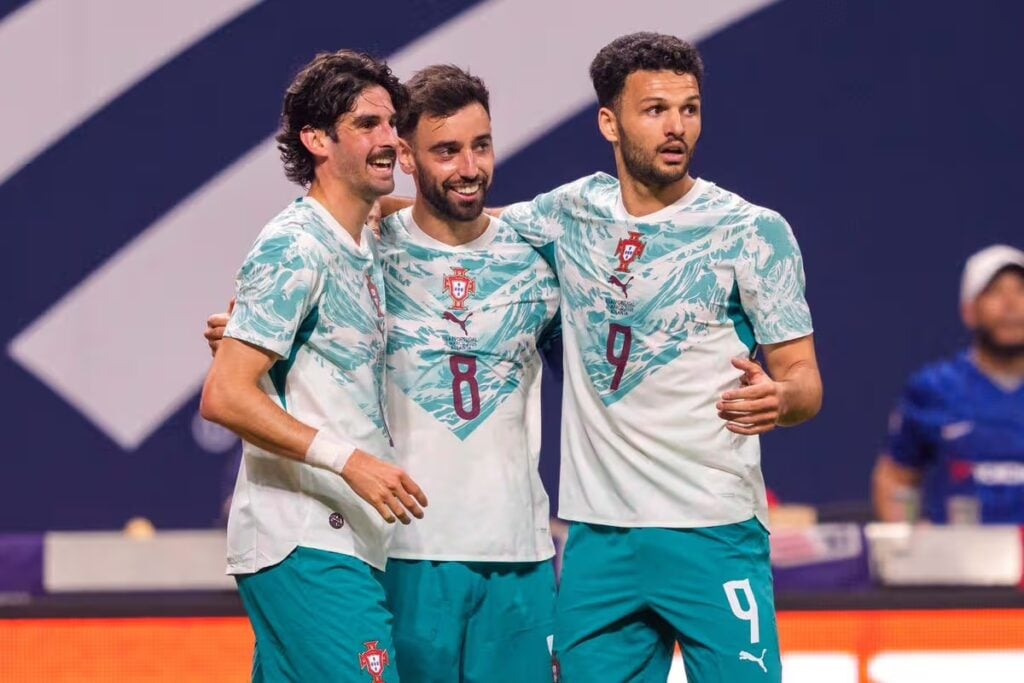
Portugal handed the United States another painful reminder of the level they still need to reach before the World Cup, winning 2-0 in Atlanta with Bruno Fernandes at the heart of everything good they produced. The Manchester United midfielder created both goals as Portugal followed a scoreless draw with Mexico by beating one of the tournament hosts with clear authority.
For the US, the result felt especially troubling because it came only days after a heavy 5-2 loss to Belgium. Mauricio Pochettino’s side have now lost eight straight matches against European opponents, and this latest defeat again exposed the gap between the Americans and the kind of teams they hope to challenge on home soil this summer.
Fernandes turned small openings into decisive moments
The first goal arrived after Portugal worked through midfield with precision. Fernandes received the ball in a dangerous area and produced a sharp backheel that released Francisco Trincao, who finished calmly to give Portugal control. Later, Fernandes delivered from a corner and found João Félix completely unmarked, allowing the forward to settle the ball and score Portugal’s second.
Those two assists summed up the difference between the sides. Portugal had more clarity, more calmness in key zones and far more quality when moments opened up. Even with several substitutions, they kept their rhythm, while the United States again looked short of ideas once the game began to tilt away from them.
Pulisic’s central role did not work
Pochettino used Christian Pulisic as a striker in the absence of a more natural centre forward, but the experiment never really clicked. The American captain had a few early chances and some bright movement, yet he could not finish any of them and was taken off at halftime after a frustrating first half that also included a booking.
Pulisic later insisted that if he had taken one or two of those chances the conversation around the performance might feel different. But the broader issue remained obvious: the US created some moments, yet once again lacked the cutting edge and control required to punish a high level European side.
Portugal stayed in command even after rotating heavily
After halftime, Portugal changed personnel without losing shape or tempo. Their second goal effectively killed the contest, and they continued to look the more comfortable team for long stretches. US goalkeeper Matt Freese still had to make strong saves late on, including one from long range and another in stoppage time.
That only added to the sense that Portugal had further gears available. The Americans were not overrun in the same dramatic way they had been against Belgium, but they were still second best in the areas that matter most against elite opposition.
Pochettino says the lesson can still help the USA
Despite back to back defeats, Pochettino argued that these matches are useful because they force his team to face the level they will encounter at the World Cup. He acknowledged the difference in star quality between the United States and teams like Portugal and Belgium, but framed the experience as part of the growth process before the tournament begins on June 11.
That may be true, but the mood around the team has clearly darkened. The USA still have time to improve, and as co-hosts they will carry major expectation. Yet this window has made one point hard to ignore: when the opposition steps up in class, the Americans still look far from ready to match them.