

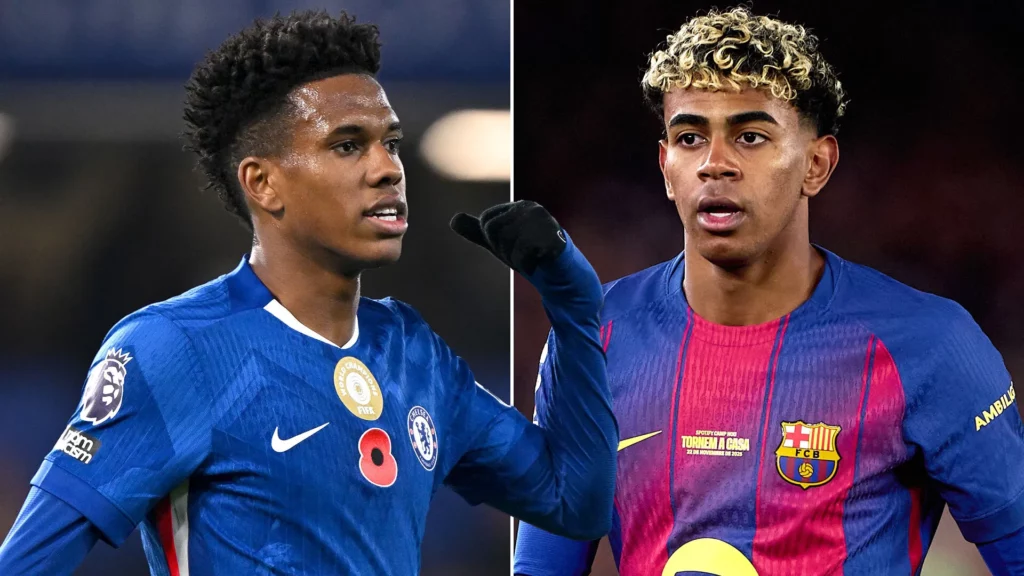
Estêvão’s Standout Display and Comparison to Yamal
Lamine Yamal exudes class in every action, even when appearing downcast, as he often did at Stamford Bridge, moving with effortless elegance. He handles the ball delicately, producing impressive force with minimal effort, stays balanced on his toes, ready to shift directions, and glides swiftly across the field. Already a Ballon d’Or runner-up, yet on Tuesday, he wasn’t the top 18-year-old right winger in the game, not by a wide margin. Chelsea’s acquisition from Palmeiras, Estêvão, secured for up to £52m, shows potential to become elite. He’s been increasingly influential since netting the late decider against Liverpool last month. His recent four starts yielded four goals, plus strikes in Brazil’s two international friendlies. Though premature, Brazil might have discovered the star they hoped Neymar would be.
Key Moments in the Match and Tactical Edges
Estêvão’s 55th-minute goal clinched the victory, already probable after Barcelona captain Ronald Araújo’s red card near halftime. It stemmed partly from Chelsea regaining possession and Reece James’s assist, but chiefly from the Brazilian’s blistering pace, deceptive moves left and right, shrugging off Alejandro Balde and Pau Cubarsí, then blasting a high finish past Joan García. Fans’ chant labeling Yamal as “just a shit Estêvão” was overly critical and rhythmic off, but clearly, the Brazilian dominated. At 80 days older with 22 fewer appearances, Estêvão appears sturdier, a trait likely enhanced by consistent Premier League play. This season’s Champions League highlights Premier League sides’ physical superiority over continental foes. Liverpool, despite domestic physical woes, crushed Real Madrid; Newcastle outmuscled Athletic Bilbao with sheer size in aerial duels. Chelsea, after initial jitters, asserted control by the first half’s midpoint, validating the strategy of deploying Pedro Neto’s speed centrally.
Broader Implications for Chelsea and European Competition
The first goal seemed inevitable for minutes prior, unsurprising from a set-piece—an area where Premier League teams excel like using gems against others’ basic tools. Barcelona’s own goal wasn’t plain, involving a quick one-two, tight-space play, and a backheeled nutmeg, but originated from a clever corner routine freeing Marc Cucurella to deliver for Enzo Fernández. This edge extends defensively too; Yamal bested Cucurella sporadically and seemed rattled by blocks, fueling frustration that prompted a dive over Cucurella’s leg for a free-kick attempt, leading to Araújo’s booking for dissent. Araújo’s subsequent rash challenge—perhaps from lingering anger, team awareness, or misjudgment—resulted in his dismissal, sealing the contest. Barcelona might have bunkered low like Everton did against Manchester United under David Moyes, but Hansi Flick’s style contrasts sharply. With a high defensive line down to 10, they retreated slightly, yet Chelsea exploited gaps, adding a third via Liam Delap and could have scored more if required. While just the league phase, with possible spring fatigue for English clubs, the trend of Premier League supremacy via speed and strength is evident. Yamal exited with 10 minutes left, met with mild boos in resigned defeat; Estêvão departed to thunderous applause shortly after, claiming the accolades as Chelsea took the points.